
PLAY & LEARNING · PLAY-BASED LEARNING
Play-Based Learning: Why Play Is How Children Learn
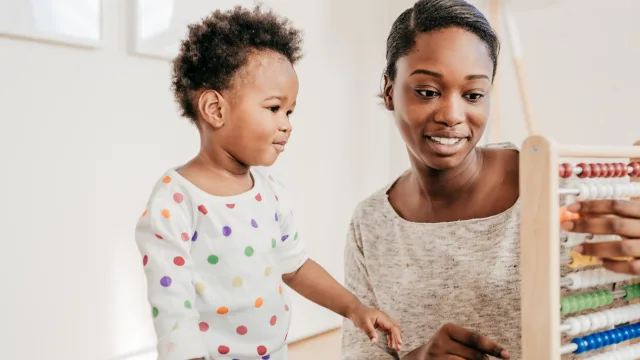
At its heart, play-based learning is an approach to child development and early education in which play is the primary context for learning. As children build, pretend, explore, create and experiment, they strengthen language, mathematical thinking, scientific reasoning, physical coordination, creativity and social-emotional skills. Learning through play is how children naturally make sense of the world from infancy through adolescence.
This guide brings together the research behind play-based learning with practical ideas for every stage of childhood. As the conceptual home for Brighter Futures Indiana's Play & Learning resources, it explains why play matters, how it supports every area of development and how families can encourage meaningful play at home every day.
Key Takeaways
Play-based learning gives children opportunities to build cognitive, social, emotional and physical skills through active exploration.
Learning through play looks different at every age, but curiosity, choice and hands-on discovery remain at the center.
Decades of research show that children thrive when play is treated as an essential part of learning, not an optional extra.
What Is Play-Based Learning?
Play-based learning is an approach to child development and early education that recognizes play as the primary way children learn. As children explore, imagine, build, move and ask questions, they're developing language, mathematical thinking, scientific reasoning, social skills, emotional regulation and physical abilities in ways that are meaningful and memorable.
Play-based learning includes a range of experiences. At one end is child-directed free play, where children choose what to do, how to do it and when to move on. Guided play adds gentle support from an adult who might introduce interesting materials, ask thoughtful questions or create an environment that encourages exploration while still allowing the child to lead. Playful learning is more structured, with a specific learning goal woven into an engaging activity. Each approach has an important place in a child's development because each encourages curiosity, active participation and discovery.
Many families worry that time spent playing comes at the expense of academic learning. Research tells a reassuring story. Children in high-quality play-based early education programs perform as well as, and often better than, peers who spend more time on direct academic instruction. They also tend to develop stronger social skills, emotional regulation and motivation to learn, providing a foundation that continues to support them as school becomes more challenging.
The Science Behind Learning Through Play
If you've ever watched a child spend 20 minutes building a block tower, pretending to run a grocery store or inventing the rules to a backyard game, you've seen a remarkable learning process at work. Research from the Harvard Center on the Developing Child helps explain why play-based learning is important: play gives children the freedom to wonder, experiment, make mistakes and try again. That cycle of curiosity and discovery helps the brain build stronger, longer-lasting connections than simply being told the answer.
One of the biggest benefits of learning through play is its impact on executive function. These are the mental skills that help children remember information, control impulses, pay attention and adjust when something doesn't go as planned. Executive function is one of the strongest predictors of later academic success.
Play also creates rich opportunities for language development and a love of reading. As children negotiate roles in pretend play, explain their ideas, invent stories and solve problems together, they naturally use new vocabulary and more complex sentences. Research from the Harvard Graduate School of Education shows that these meaningful conversations help children develop stronger narrative skills and reading comprehension by connecting language to experiences that matter to them.
Play even supports learning by helping children feel safe and relaxed. Enjoyable, child-directed play has been associated with lower cortisol levels, the body's primary stress hormone.
What Play-Based Learning Looks Like in Practice
The easiest way to understand play-based learning is to see it in action. While the activities change as children grow, the learning process stays the same: children follow their curiosity, test ideas, solve problems and learn from experience. These play-based learning examples show what that looks like across childhood.
A baby shakes a rattle to discover that their actions create sound, building an understanding of cause and effect.
A toddler fills and dumps water between containers, exploring volume, gravity and fine motor skills.
A preschooler runs a pretend restaurant, practicing language, counting, problem-solving and cooperation.
A school-age child builds a marble run, experimenting with engineering, physics and persistence as they redesign it again and again.
A teenager learns to code to build their own video game, developing technical skills through self-directed exploration.
From infancy through adolescence, the pattern is the same. Children learn best when they're actively exploring, making decisions and discovering how the world works for themselves.
Babies & Toddlers
Birth–12 Months | Sensory exploration | Every touch, sound and movement helps babies make sense of the world. By reaching, grasping, watching faces and exploring objects that respond to their actions, they're building the brain connections that support future learning.
1–2 Years | Cause and effect | Toddlers love to repeat the same action again and again because they're testing what happens. Filling, dumping, dropping and stacking are all ways they investigate how the world works.
2–3 Years | Parallel and imitative play| Two-year-olds often play alongside others, watching closely and copying what they see. Through imitation, they build language, social skills and confidence with new ideas and movements.
Preschool & Kindergarten
3–4 Years | Dramatic and pretend play | Imagination takes center stage as children become chefs, veterinarians, astronauts and superheroes. Pretend play strengthens language, literacy, problem-solving and emotional understanding.
4–5 Years | Rule-based and cooperative play | Games with simple rules, cooperative building projects and group activities help children practice self-control, teamwork, turn-taking and flexible thinking.
5–6 Years | Guided play and structured exploration | Kindergartners thrive when adults provide engaging materials and a loose goal while leaving room for children to experiment, make decisions and discover solutions independently.
School-Age
6–10 Years | Project-based and challenge play | School-age children deepen their learning through long-term projects like building, coding, creating, performing and experimenting. Their interests become powerful motivators for learning.
Adolescents
11–14 Years | Self-directed mastery | As children become teenagers, play often evolves into passionate hobbies and creative pursuits. Whether they're making music, designing games, creating art or mastering a sport, they're building expertise through curiosity, persistence and self-directed learning.
Play-Based Learning: Babies and Toddlers
During the first two years of life, there is no meaningful separation between play and learning. Every time a young child explores an object, responds to a familiar face or practices a new movement, they're learning through experience. These everyday moments are the foundation of learning through play.
What Play-Based Learning Looks Like at This Age
Babies and toddlers don't need flashcards or structured lessons to learn. They learn by doing. When a baby drops food from a highchair and watches it fall, they're conducting a simple experiment. What happens if I let go? Will it fall again? The fact that they laugh and repeat it over and over doesn't make it any less educational. It makes it more memorable. Curiosity and enjoyment encourage the brain to keep exploring.
Many of the best play-based learning activities at this age involve ordinary objects. Babies touch, mouth, shake, bang and toss toys to discover their properties. Toddlers stack blocks, fit shapes into containers and carry objects from place to place. Through these experiences, they're building an understanding of cause and effect, space, movement and how objects relate to one another.
Some of the most important play happens with people. Games like peek-a-boo, taking turns making sounds, singing songs and copying facial expressions teach babies that communication is a back-and-forth experience. These playful interactions lay the groundwork for language, relationships and emotional security.
Movement is another essential form of play. Tummy time, rolling, crawling, climbing and those first wobbly steps help children explore their surroundings while strengthening the brain-body connections that support future learning.
Want to learn more about how play supports development during these early years? Explore our Baby Hub, 1-Year-Old Hub and 2-Year-Old Hub for age-specific milestones, activities and guidance.
Play-Based Learning Activities: Babies and Toddlers
-
Treasure Basket Exploration
Fill a shallow basket with safe household objects made from different materials, such as a wooden spoon, rubber ball, silicone brush, fabric scrap or small metal container. As babies reach, grasp, mouth and compare each object, they're exploring textures, weights and shapes while strengthening fine motor skills and beginning to recognize similarities and differences.
-
Peek-a-Boo and Hiding Games
Hide a favorite toy under a blanket or cloth and encourage your child to find it. As they become more confident, make the hiding places slightly more challenging. These playful moments help children understand that objects continue to exist even when they're out of sight while also strengthening problem-solving, social interaction and anticipation. It's a perfect play based learning example because the excitement of finding the toy encourages children to repeat the experience again and again.
-
Water Play
Offer a shallow container of water with cups, spoons and other simple tools during supervised play. Babies and toddlers naturally fill, pour, splash and experiment with how water moves from one container to another. Along the way, they're discovering ideas like volume, cause and effect and the properties of different materials while refining coordination and hand control. The learning happens naturally because children are following their own curiosity.
Play-Based Learning: Preschoolers and Kindergartners
The preschool and kindergarten years are often considered the golden age of play-based learning. Children are naturally curious, eager to explore and capable of making connections across language, math, science and social skills through play. Research consistently shows this is one of the most effective times to learn through hands-on exploration, making it the perfect time to build on play rather than replace it with worksheets.
What Play-Based Learning Looks Like at This Age
During the preschool years, play becomes more imaginative and purposeful. A child pretending to run a grocery store is practicing counting, sorting, reading signs and solving problems with friends. Another playing doctor is building vocabulary, developing empathy and working through real-life experiences in a safe, familiar way. Dramatic play gives children opportunities to practice academic and social skills together because they're learning in a context that feels meaningful.
This is also an ideal age for guided play. Adults can set out interesting materials or create invitations to explore, such as a sensory bin with measuring cups or a table filled with natural objects to sort and compare. The environment provides direction, but children remain in control of their discoveries. High-quality preschool classrooms use this same approach, creating intentional spaces that encourage exploration while supporting clear developmental goals.
A play-based curriculum doesn't mean children are left to entertain themselves all day. It means teachers thoughtfully design activities and environments that encourage children to build the skills they'll need for school through meaningful play. Progress is measured by observing how children communicate, solve problems, collaborate and explore, not simply by how many letters or numbers they can memorize.
For age-specific milestones, activities and developmental guidance, visit our 3-Year-Old Hub, Pre-Kindergartener Hub and Kindergartener Hub.
Play-Based Learning Activities: Preschoolers and Kindergartners
-
Create a Dramatic Play Center
Transform a corner of your home or classroom into a pretend grocery store, post office, veterinarian's office or construction site using simple household items. Add a few props, then let children take the lead. As they create stories, solve problems and negotiate roles, they're building language, early math, literacy and social skills.
-
Loose Parts Building Challenge
Gather open-ended materials like cardboard tubes, bottle caps, wooden blocks, fabric scraps and popsicle sticks. Then offer a simple challenge, such as, "Can you build something that holds this marble?" or "Can you make a bridge?" There isn't one correct answer. Children learn by designing, testing, making changes and trying again, strengthening creativity, engineering thinking and persistence.
-
Storybook Play
Read a favorite book together, then invite children to bring the story to life. They can act out scenes, create simple costumes, build props from recycled materials or even invent a new ending. Combining books with dramatic play strengthens comprehension, vocabulary and storytelling while encouraging children to think creatively about the stories they love.
Play-Based Learning: School-Age Kids
Starting school doesn't mean children outgrow play-based learning. In fact, play becomes even more valuable as a balance to the structure of the school day. When school-age children have time to explore their interests, create, build and play at home, they strengthen the executive function, creativity and motivation that help them succeed both in and out of the classroom.
What Play-Based Learning Looks Like at This Age
As children grow, schedules often become more structured. Homework, sports and extracurricular activities can leave less time for open-ended play, even though research shows it continues to support healthy cognitive and social development. Giving children opportunities to choose how they spend their free time helps preserve the curiosity and confidence that fuel lifelong learning.
One of the most powerful forms of play at this age is the self-directed project. Whether a child writes a comic book, builds a backyard fort, designs a video game, creates a science experiment or learns a new instrument, they're planning, solving problems and sticking with challenges that matter to them. The motivation comes from wanting to create something meaningful, not from earning a grade.
Play also happens through games and making things. Board games, card games and team sports help children develop strategy, emotional regulation and resilience as they learn to cooperate, compete and recover from setbacks. Building, crafting, coding, cooking and creating encourage children to turn ideas into something tangible while strengthening creativity and critical thinking.
For more age-specific activities and developmental guidance, visit our School-Age Hub.
Play-Based Learning Activities: School-Age Kids
-
Open-Ended Building Challenge
Gather simple materials like index cards, straws, tape, rubber bands and paper clips, then introduce a challenge such as, "Can you build the tallest freestanding tower?" or "Can you make a bridge that holds this book?" The goal provides direction, but the solution is entirely up to the child.
-
Design Your Own Game
Invite your child to invent a board game or card game from scratch. They'll create the rules, design the game pieces, test it with family members and make improvements based on what works and what doesn't. Along the way, they're practicing writing, math, strategic thinking and problem-solving while learning that great ideas often come through revision.
-
Long-Term Passion Project
Support a project your child genuinely wants to pursue over several weeks. It might be writing a graphic novel, building a Minecraft world, planting a garden, creating a stop-motion movie or learning to cook a favorite meal. Long-term creative projects encourage planning, persistence and independence while giving children the satisfaction of creating something meaningful from start to finish.
Play-Based Learning: Adolescents
When people think about play-based learning, they usually picture young children building with blocks or pretending to run a restaurant. But the principles that make play such a powerful way to learn don't disappear in adolescence. As teenagers discover new interests, tackle meaningful challenges and pursue goals they genuinely care about, they're still learning through curiosity, exploration and experience.
What Play-Based Learning Looks Like at This Age
Play-based learning looks different during adolescence, but the core principles stay the same. Teenagers learn best when they're actively engaged in something they chose, care about and have the freedom to improve over time. The focus shifts from imaginative play to meaningful pursuits that build skills, confidence and independence.
A teenager who spends hours practicing guitar, coding an app, training for a sport or writing a novel isn't just developing a hobby. They're setting goals, solving problems, learning from mistakes and building expertise through sustained effort. The motivation comes from within, making the learning deeper and more lasting than something done simply to earn a grade.
Just as importantly, these experiences help teenagers discover who they are. As they explore interests and develop new skills, they begin to identify their strengths, values and passions. At its core, learning through play is about following curiosity, taking ownership of learning and growing through experience. Those principles are just as valuable at 14 as they are at 4.
For more age-specific activities, milestones and guidance, visit our Adolescent Hub.
Play-Based Learning Activities: Adolescents
-
Long-Term Passion Project
Encourage your teenager to commit to a project they genuinely care about for several weeks or months. It could be developing an app, filming a documentary, starting a small business, composing music or training for a fitness goal. Your role isn't to manage the project. It's to provide encouragement, resources and an interested audience.
-
Real-World Design Challenge
Invite your teen to solve a real problem at home or in the community. They might design better storage for the garage, build a garden bed, create a website for a local organization or enter a robotics, engineering or science competition. Authentic challenges inspire creative thinking because the work has a purpose beyond the classroom.
-
Teach What You Know
Ask your teenager to teach you or a younger sibling something they've mastered, whether it's baking, coding, photography, skateboarding or playing an instrument. Teaching requires them to organize their knowledge, communicate clearly and think about their own thinking, making it one of the most effective play-based learning activities for deepening understanding while building confidence.
Supporting Play-Based Learning at Home and in Childcare
If you're choosing a childcare or after-school program, look for an environment where play is treated as an essential part of learning. High-quality programs provide plenty of time for child-directed play, offer diverse materials that encourage creativity and exploration, include outdoor play every day and create classrooms where teachers observe, ask thoughtful questions and extend children's ideas instead of directing every activity.
Play is at the heart of every area of development. Continue exploring our Subject Hubs to discover how play supports learning in Math, English Language Arts, Science, STEM, Social Studies, Creative Arts, Physical Health and Social-Emotional Learning.
Then visit our Age Hubs for developmentally appropriate guidance at every stage, from Baby, 1-Year-Old, 2-Year-Old, 3-Year-Old, Pre-Kindergartener, Kindergartener, School-Age and Adolescent. Together, these resources will help you understand not only what children are learning, but how they learn best through play.